

What Is Hallux Valgus?
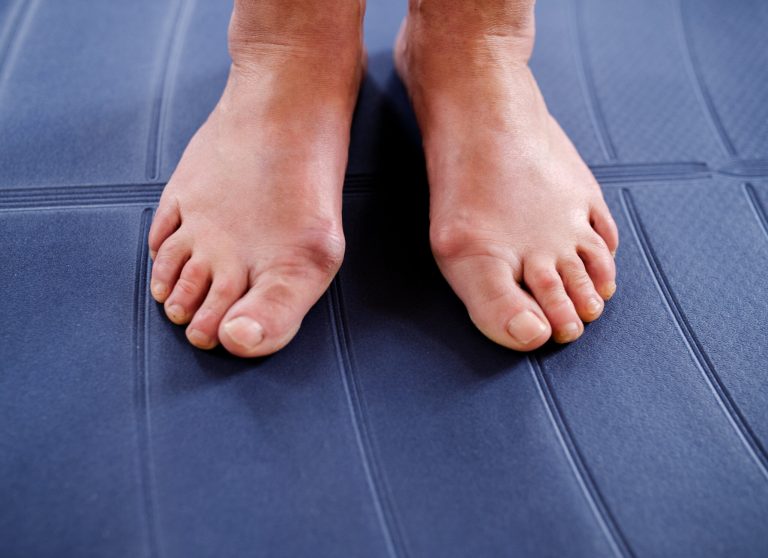
Hallux valgus is a deformity in which the big toe bends outward toward the second toe. It is usually accompanied by a bony protrusion (bunion) on the outer side of the big toe joint. This condition may cause aesthetic concerns as well as pain, walking difficulties, and a reduced quality of daily life.
Causes of Hallux Valgus
Several factors may contribute to the development of hallux valgus, including:
-
Wearing inappropriate or tight shoes (especially pointed-toe or high-heeled shoes)
-
Genetic predisposition (family history of hallux valgus)
-
Gait abnormalities caused by foot trauma
-
Flat feet
-
Excess weight
-
Rheumatic diseases
-
Short Achilles tendon
-
High-arched foot structure
How Is Hallux Valgus Diagnosed?
Diagnosis usually begins with a physical examination. The specialist evaluates the shape of the foot, the position of the big toe, and the patient’s symptoms to establish a preliminary diagnosis. For a definitive diagnosis, the following methods are used:
-
Foot X-rays: Anteroposterior and lateral foot radiographs are taken to measure the angle between the big toe and the metatarsal bones.
-
Medical history: The patient’s foot structure, complaints, and past conditions are reviewed.
-
Clinical evaluation: The degree of toe deviation, pain level, and mobility are assessed.
A visible bony prominence and deformity of the toe are significant findings that facilitate diagnosis. X-rays taken while standing or walking provide clearer results.
What Are the Treatment Methods?
Treatment is determined according to the severity of the condition, the patient’s age and overall health, and the impact on daily life. Treatment options are divided into two main groups:
1. Conservative (Non-Surgical) Treatment
This is applied in the early stages of the condition or when pain is mild. The goal is to slow the progression of the deformity and relieve symptoms. Methods include:
-
Wearing wide-toe shoes
-
Toe spacers or silicone supports
-
Night splints
-
Orthopedic insoles
-
Foot exercises
-
Pain relievers and anti-inflammatory medications
These methods do not correct the deformity but may slow its progression and improve comfort.
2. Surgical Treatment
In advanced hallux valgus cases, surgery provides the only permanent solution, especially when:
-
Pain is severe
-
Daily quality of life is significantly reduced
-
Other treatments have failed
-
Toe position is severely deformed
Surgery is not limited to shaving off the bony bump. It often involves realigning the metatarsal bones, correcting the toe angle, and sometimes reconstructing tendons or ligaments.
Important Note: Simply removing the bump (bone shaving) is usually insufficient and the deformity may recur. Therefore, surgical intervention should always be planned by an experienced orthopedic specialist.
Examples of Hallux Valgus Cases
-
Metatarsal separation: Deformity caused by an increased angle between the big toe and the first metatarsal bone.
-
Deviation toward the second toe: The big toe gradually shifts toward and may even overlap the second toe.
-
Hallux valgus in older adults: Structural deterioration in the joint over time leads to a more severe deformity.
Symptoms of Hallux Valgus:
Outward deviation of the big toe (usually toward the second toe)
Formation of a bony bump on the inner side of the big toe joint
Pain and tenderness around the big toe
Discomfort or pressure when wearing shoes
Redness, swelling, and skin irritation
Overlapping of the big toe onto the other toes
Discomfort and balance problems while walking
Progressive deformity and changes in the overall foot structure
Frequently Asked Questions:
- Hallux valgus is a progressive condition. As it advances, it can be managed with both surgical and non-surgical treatments. In the early stages of hallux valgus, non-surgical methods may be effective.
- Hallux valgus is often a hereditary condition that runs in families. While wearing narrow, high-heeled shoes may contribute to its development in some patients, the deformity can also occur in others even when they wear wide, comfortable shoes.
- Hallux valgus is typically a hereditary health condition that runs in families. While wearing narrow, high-heeled shoes may play a role in its development for some patients, the deformity can also occur in others even when they wear wide, comfortable shoes.
- Hastalığın derecesi fizyoterapist tarafından yapılan değerlendirme ile ölçülür. Başta hastanın yürüyüşü sonrasında hasta yere basarken ayağı incelenir. Bu sırada hastalığın ne derecede olduğu belirlenir.
Contact US

Fill out the form on the side to receive free information about your orthopedic condition, and we’ll get back to you quickly.

